In the last couple months, I had the opportunity to attend the International Broadcasting Convention (IBC) 2026 and NAB Show New York. Coming off of NAB this spring, I was curious how much the conversation would move in six months. The answer: more than I expected in some places, and right where I left it in others.
Here’s what stuck with me across a year of client conversations and industry conferences.
AI in broadcast workflows: AI has stopped looking for a job.
A few years ago, when AI first started showing up in media and broadcast, the conversation was mostly “where does this fit?” Everyone was in trial mode, testing things out and figuring out what it was good for. At IBC this year, that question had largely been answered. The conversations were about specific workflows with clear intent behind them. How can AI help with creative workflows? With quality checking? With monitoring and compliance?
This shift explains why adoption is finally picking up.
Think about cloud. When broadcasters first started moving certain operations to the cloud, there was real hesitation. Many broadcast workflows had been done essentially the same way for decades, so being asked to start editing video from a different kind of workstation gave people pause. But once folks actually did it, they realized it was pretty much the same experience. If I’m editing video hosted on a virtual machine instead of a tower under the desk, the piece I deliver is the same piece. Nobody watching at home can tell where it was hosted.
AI raised a different kind of worry. The concern wasn’t where the work happened. It was what might end up on air. There’s a tremendous amount of care that goes into what reaches viewers, and nobody wanted to flip a switch marked “use AI in broadcast” and find out live what it did. When the pitch was that broad, the answer was usually some version of “no thanks, I want to stay in control of my content.” I get it. I’d have said the same thing.
Specific use cases change that answer, because they make it obvious what AI is doing and where the human stays in the loop. Have AI tag your content, so your editors spend their time cutting the montage or the feature instead of logging footage. Have AI pull a segment from the linear broadcast, summarize it and queue it up for social, then have a producer check it before it posts.
None of that hands over the keys. It takes the repetitive work off people’s plates so they can focus on the work that actually needs them. That’s the thinking behind Presidio Resonate, too: media intelligence that helps you understand your archive, streamline your media supply chain, and automate clipping, clip assembly, ingest and distribution, one piece at a time. It also opens the door to creating more content from what you already have, and repurposing it for new audiences.
The satellite conversation crossed the Atlantic.
In July, the FCC adopted its plan to auction off a large piece of the upper C-band, and satellite services will have to clear much of that spectrum over the next several years. For a lot of broadcasters, that means taking a hard look at moving video transport to IP.
You’d think that would be mostly a U.S. conversation. But even at a European show, customers and vendors were leaning into video over IP workflows and how to streamline live operations around them. When satellite starts to shrink in your broadcast footprint, you have to rethink what the infrastructure underneath it looks like.
Presidio has done this with the National Hockey League (NHL). More on that in the next section below.
Centralize first, then scale.
One of the biggest topics for us at IBC was VTOC, the NHL’s Virtual Technical Operations Center, which Presidio built and operates. We’re six seasons in now, and I think it’s a good model for where a lot of the industry is headed.
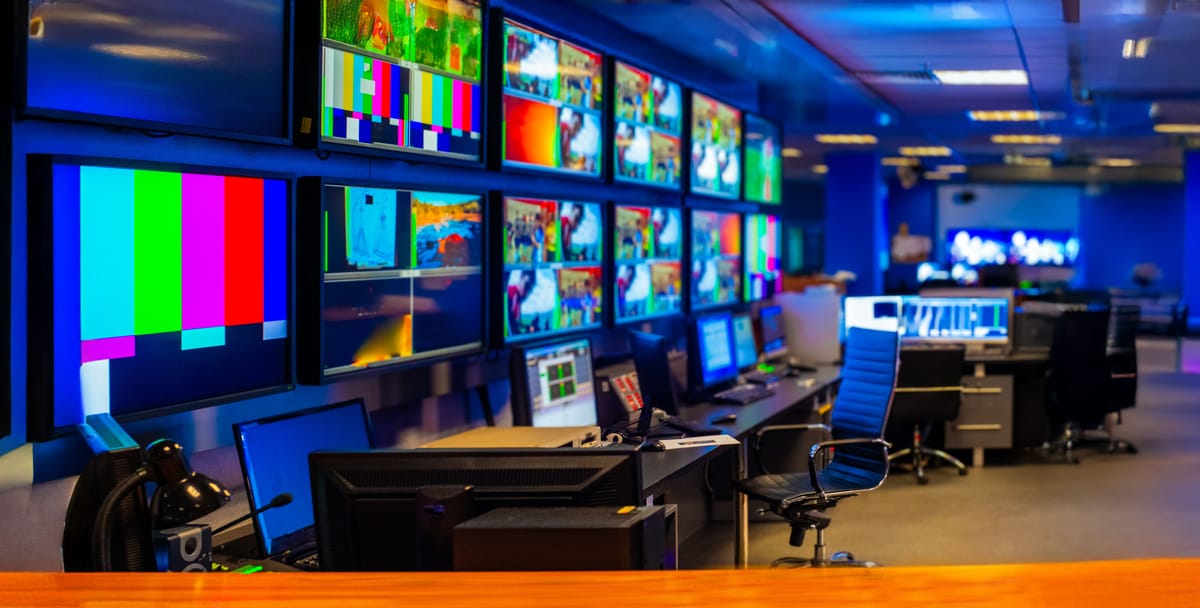
At its core, VTOC centralizes. For the NHL, it takes video signals from 32 arenas and brings them into a single pane of glass, with media services and an orchestration layer on top, so you always know where every feed is going and that it’s routed properly. Our managed services team provides eyes on glass: monitoring signals, applying updates and working as an extension of the League’s own team across more than 1,300 regular season games a year.
Two things make that model especially relevant right now for sports leagues, broadcasters, or any video-centric media company. First, broadcasters are stretched thin. They’re taking on more rights and producing more live content, often without more people to do it. Second, if you’re moving from satellite to IP, you’re likely centralizing your video footprint anyway. And when you’re changing a workflow that’s been done the same way for decades, having experienced eyes on glass is critical.
What I’m proudest of, six seasons in, is how VTOC has evolved. This industry never sits still. Leagues and broadcasters acquire new rights and add new distribution endpoints, and the team has been able to bring in new workflows and technologies quickly and efficiently as that happens. That’s what lets it scale.
Centralization also sets up what comes next. When all of your live video runs through one organized, well-monitored foundation, it becomes much easier to branch out into things like live clipping, metadata tagging and extraction, or dubbing. Get the organization and rigor right first, and the creativity and innovation follow.
The archive is still the opportunity.
At NAB, I wrote about the broadcasters and organizations sitting on decades of content, some of it still on tape, that hasn’t seen the light of day. Six months later, that’s even more true. Archive migration is where we’ve seen some of our strongest momentum coming out of IBC, and I expect it to stay a hot topic for a long time.
It doesn’t happen overnight, though, and there’s a good reason for that. This is a 24/7 industry. The priority is always the live and the now: getting the game, the show or the story out to fans. Operational changes, even the ones everyone agrees are important, often have to wait their turn.
That’s also why I always say every broadcaster, league and team is at a different point in its journey. There are a lot of similarities across this industry, but whether it’s archive, AI or anything else, everyone is starting from a different place.
Personalization keeps getting more practical.
Another theme from NAB that kept growing at IBC: personalization. Alternate broadcasts, if you will, are only part of it. The workflows behind personalized advertising and monetization are getting much more streamlined, from tools that quickly verticalize video for social to insights that help tailor ads by market or region. Work that used to take a lot of manual effort is starting to feel routine. That’s a good sign for anyone trying to reach new fans without adding headcount.
Telling the story with AWS and Iconik by Backlight.
I also joined AWS and Backlight on a panel about our approach to media supply chain workflows, and specifically how we’re using AI-driven capabilities in this space. We had a great turnout, and the response was very positive.
I’ll be honest: one of the most useful takeaways was a little humbling. A few customers didn’t realize how deeply Presidio is involved in media management and the media supply chain, whether that’s migrating an archive or applying media intelligence to tag content and assemble clips. That’s on us to keep telling the story, and the panel was a great step.
It was also great to hear Iconik by Backlight’s perspective on the work. Building on the success we’ve had together with products like Iconik, they see our modular approach to AI as a way to help scale AI capabilities across a platform of their size.
On to the off-season.
Six months between NAB and IBC, and the industry moved. AI found its purpose. Satellite started giving way to IP. The archive kept calling. What hasn’t changed is that the live show always comes first, and it should. Our job is to make everything behind it more organized, more scalable and easier to change, so the people creating the content can keep their focus where it belongs.
Contact us to learn more and come see us at SVG Summit on December 14-15 in New York City.